
Skin Health & Education
Contour You • North Scottsdale, Arizona
Skin Health & Education
Healthy skin starts with understanding it.
Explore how your skin works, why it changes over time, and how daily protection and carefully selected treatments fit together. Contour You’s skin health education brings the science of aging and rejuvenation into clear, practical focus for our Scottsdale community.
Skin health essentials • 01
Your Skin: The Body’s Largest Organ
Skin is the body’s largest organ. It helps keep moisture in, forms a protective barrier, senses touch and temperature, and helps regulate body temperature. Caring for it is about function as well as appearance. [1]
The outer epidermis continually renews and helps form the skin barrier. Beneath it, the dermis contains connective tissue, nerves, blood vessels, and glands. Underlying fatty tissue cushions and insulates the body.
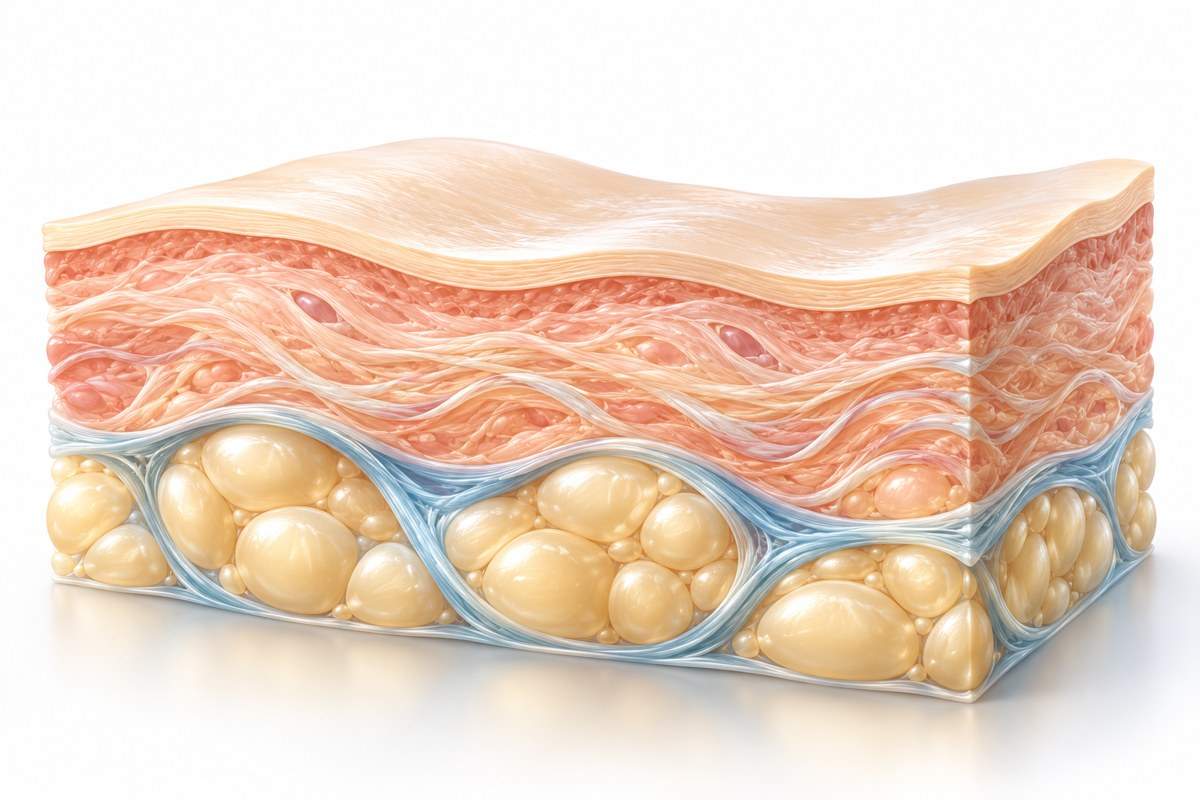
Your everyday takeaway: Start with gentle cleansing, moisturizer suited to your skin, and consistent sun protection. More products and stronger exfoliation are not automatically better.
Skin health essentials • 02
What Causes Premature Skin Aging?
Premature skin aging is influenced by environmental exposure and lifestyle, especially ultraviolet (UV) radiation and smoking. This differs from natural aging, which is influenced by time and genetics. [2]
Repeated UV exposure can contribute to uneven pigmentation, wrinkles, and changes in skin texture. Smoking can accelerate visible aging. Skin may also become thinner and drier with natural aging; not every change means your routine has failed.
For life in Scottsdale: Plan sun protection for ordinary errands and outdoor activities throughout the year. Shade, protective clothing, and sunscreen work together.
Skin health essentials • 03
Understanding Free Radicals and Oxidative Stress
Free radicals are reactive molecules with an unpaired electron. Oxidative stress occurs when reactive molecules overwhelm the body’s antioxidant defenses. UV exposure can increase reactive oxygen species in skin. [3]
Some reactive oxygen species have normal roles in cell signaling. In excess, they can contribute to damage to cellular components. “Free radicals” and “reactive oxygen species” are related terms, but not every reactive oxygen species is a free radical.
Your everyday takeaway: Reduce avoidable UV exposure. An antioxidant serum can complement your routine, but it does not replace sunscreen or other sun protection.
Product results depend on the ingredient, formulation, and supporting clinical evidence. Laboratory antioxidant activity alone does not establish an anti-aging benefit in people.
Skin health essentials • 04
Collagen, Elastin, and Changes in Aging Skin
Collagen helps give skin structural support; elastin helps it stretch and recoil. Both are part of the dermal connective-tissue network, which changes with age and accumulated sun exposure. [1] [4]
UV exposure can activate enzymes that break down skin’s connective tissue. Changes in this network contribute to wrinkles and altered skin quality. Facial aging also involves underlying fat, muscle, and bone, so skin treatments alone do not address every cause of sagging or volume loss.
What this means for your plan: A consultation should distinguish texture, pigment, laxity, and volume concerns before choosing a treatment. “Collagen stimulation” is not a guarantee of a specific amount of tightening.
Facial Aging Through the Decades
Skin health essentials • 05
Protecting Your Skin: SPF, Antioxidants, and Skincare
Daily protection starts with broad-spectrum, water-resistant sunscreen with SPF 30 or higher, plus shade and protective clothing. Broad-spectrum means protection against both UVA and UVB rays. [5]
- Apply enough: Follow the label and cover exposed skin, including often-missed areas such as ears, neck, and hands.
- Reapply outdoors: About every two hours, and after swimming or sweating as directed on the label.
- Support your barrier: Choose a gentle cleanser and moisturizer you can use consistently.
- Add antioxidants thoughtfully: Some topical vitamin C formulations have shown improvements in photoaged skin in clinical studies; results cannot be assumed for every product. [6]
Keep it sustainable: A routine you can tolerate and follow consistently is a better starting point than layering many active ingredients at once.
Skin health essentials • 06
Autophagy and Cellular Maintenance
Autophagy is a cellular maintenance process that breaks down and recycles some damaged or unneeded cell components. It helps maintain cellular balance and is being studied in skin biology and aging. [7]
Think of it as one part of a cell’s recycling system, not a switch that makes skin younger. Its effects depend on the cell type and biological context. Much of the skin-aging research involves cells, tissues, or animal models; these findings do not automatically establish visible rejuvenation benefits in people.
What the evidence does—and does not—tell us: Understanding autophagy does not prove that a skincare product or aesthetic treatment activates it in patients or reverses biological aging. This page does not recommend fasting or supplements to alter autophagy.
We will expand this topic as reliable human clinical evidence develops.
Skin health essentials • 07
Advanced Skin Rejuvenation: Protect, Correct, Maintain
Skin rejuvenation works best as a plan that combines prevention, assessment of existing concerns, and ongoing care. At Contour You in North Scottsdale, “Protect, Correct, Maintain” is a way to organize these decisions—not a promise to stop aging.
01
Protect
Build consistent sun protection and a gentle home-care routine.
02
Correct
Discuss your specific concerns and whether an in-office treatment is appropriate.
03
Maintain
Follow aftercare, protect your skin, and reassess your routine and results over time.
Treatment selection depends on your skin tone, health history, medications, recent sun exposure, goals, and tolerance for downtime. Ask about expected benefits, alternatives, and risks before treatment. [8]
Cosmetic treatments can improve selected visible concerns; they do not replace skin-cancer evaluation or prevent all future sun damage. Results and recovery vary.
Make informed decisions
Bring your questions. Build your plan.
Contour You is a med spa in North Scottsdale, Arizona, with medical oversight by Dr. Scott W. Siverhus, a board-certified orthopedic surgeon. Our educational library helps you prepare for a conversation about your skin, your goals, and the care that fits your life.
Meet our team · Explore our treatments
Skin health comes first. A new, changing, growing, or bleeding spot deserves assessment by a dermatologist before cosmetic treatment. Learn which changes need attention.
Your skin. Your questions. A thoughtful next step.
Tell us what you want to understand or improve. We can discuss home care, appropriate treatment options, and realistic expectations at your consultation.
Evidence & editorial care
Sources behind the education
These references support the general skin-health concepts on this page. A research finding is not an endorsement of every product or device, and basic science is distinguished from demonstrated benefits in people.
- How does skin work? — InformedHealth.org / NCBI Bookshelf
- 11 ways to reduce premature skin aging — American Academy of Dermatology
- UVA-induced oxidative stress in human skin in vivo — research study
- UV light, collagen and elastin — human skin research · The Anatomy of the Aging Face — research review
- Sunscreen FAQs — American Academy of Dermatology
- Topical ascorbic acid on photoaged skin — randomized, double-blind clinical study
- Autophagic Control of Skin Aging — peer-reviewed research review
- Questions to ask before a cosmetic treatment — American Academy of Dermatology
Prepared by: Contour You · Updated: October 10, 2026
General education only; this page does not diagnose a skin condition or replace individualized medical advice.

We’d Love to Hear From You
We are ready to help you create your inner and outer glow at Contour You Med Spa! We invite you to bring your concerns to us and see what we can do to help you safely and effectively treat your specific needs.